A Cheap Sailboat Autopilot WiFi Remote Using ESP32

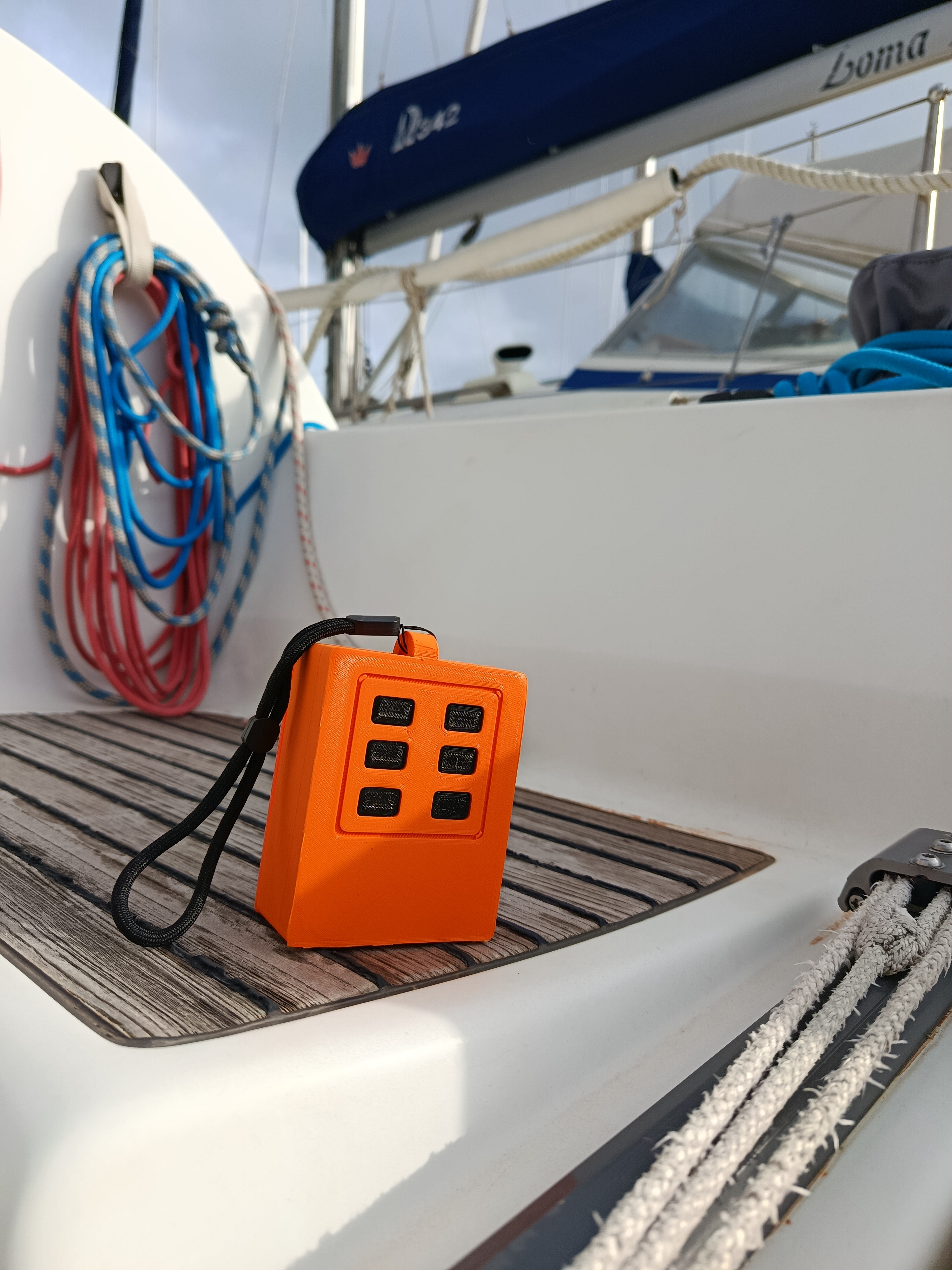
In my spare time, I like to go out with my sailboat. I also frequently sail solo, and even if not mandatory, it would be useful to be able to control the direction of the autopilot from every point of the sailboat.
The “official” remote for my autopilot is the Raymarine S100, which costs 600€; it is too much in my opinion, so I continued sailing without.
In 2021 I did my first try to overcome this cost, by creating a DIY device; the solution was an arduino, with an opto-coupled Seatalk1 interface, and a 433 MHZ receiver plus a tiny 433 MHZ transmitter.
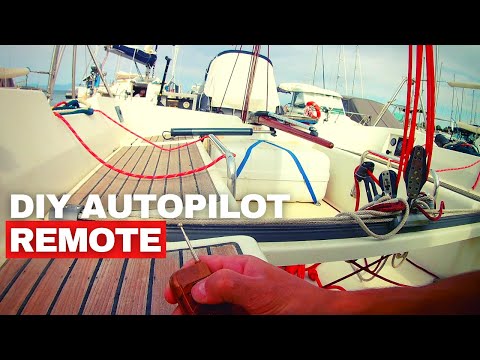
It worked, but it had 3 major flaws:
So after some months I removed it, and I used the Seatalk1 port to connect a wifi gateway from vela-navega.com, that allowed me to broadcast all instruments data through wifi.
I was happy with it since it allowed me to connect wind, depth, gps and AIS with my laptop and mobile phone. But one day the idea of an autopilot remote came back, but this time I wanted to exploit the wifi gateway for it.
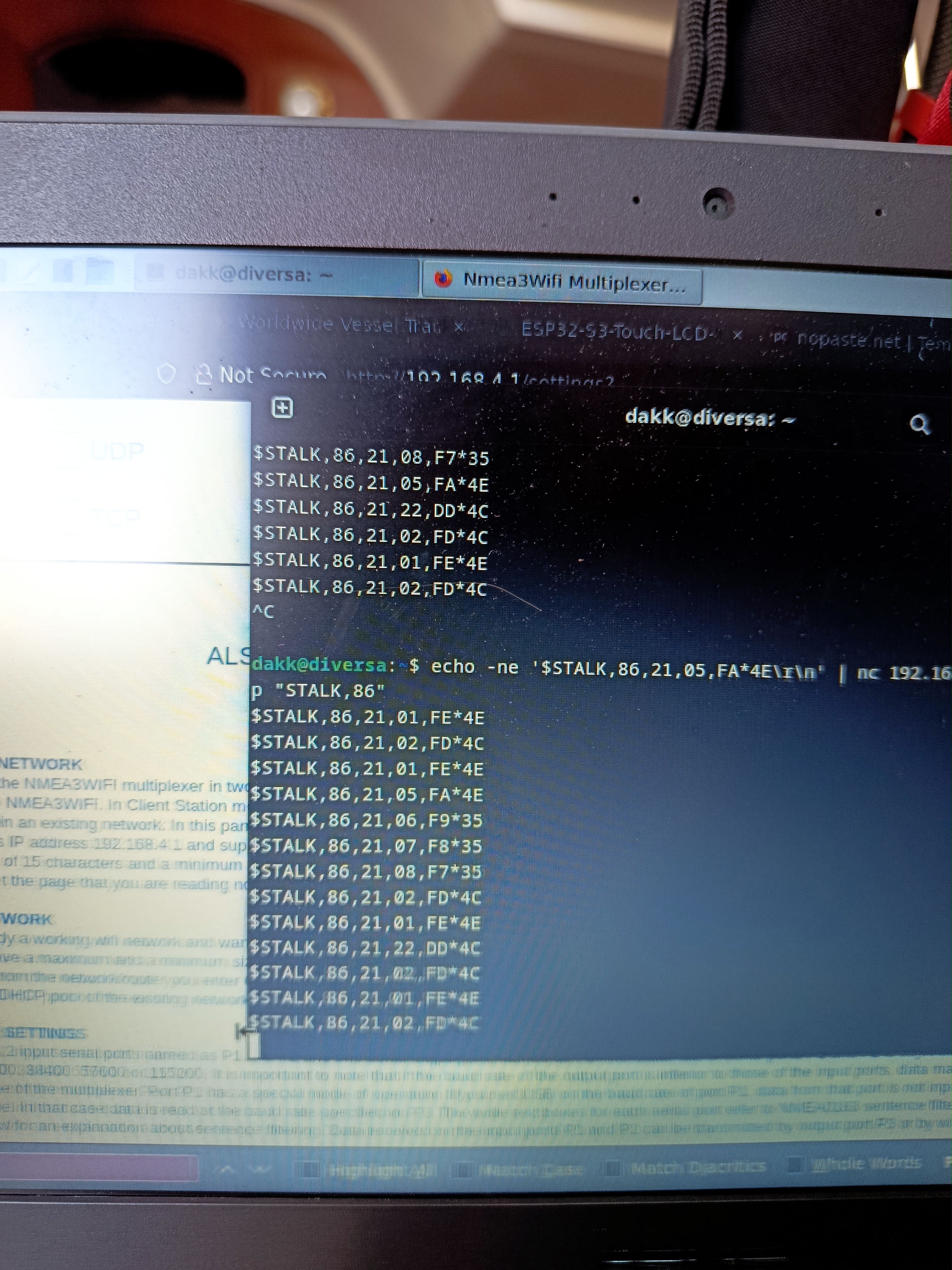
The first thing to do was to try to send Seatalk1 autopilot sentences using netcat, directly to the wifi gateway; and surprise, it worked. The nmea183 sentences are translated and sent to the seatalk bus, and received by the autopilot.
So in a week I created a simple PCB with 6 buttons, an ESP32 and a 1860 lithium battery. Then I created a simple enclosure for it:
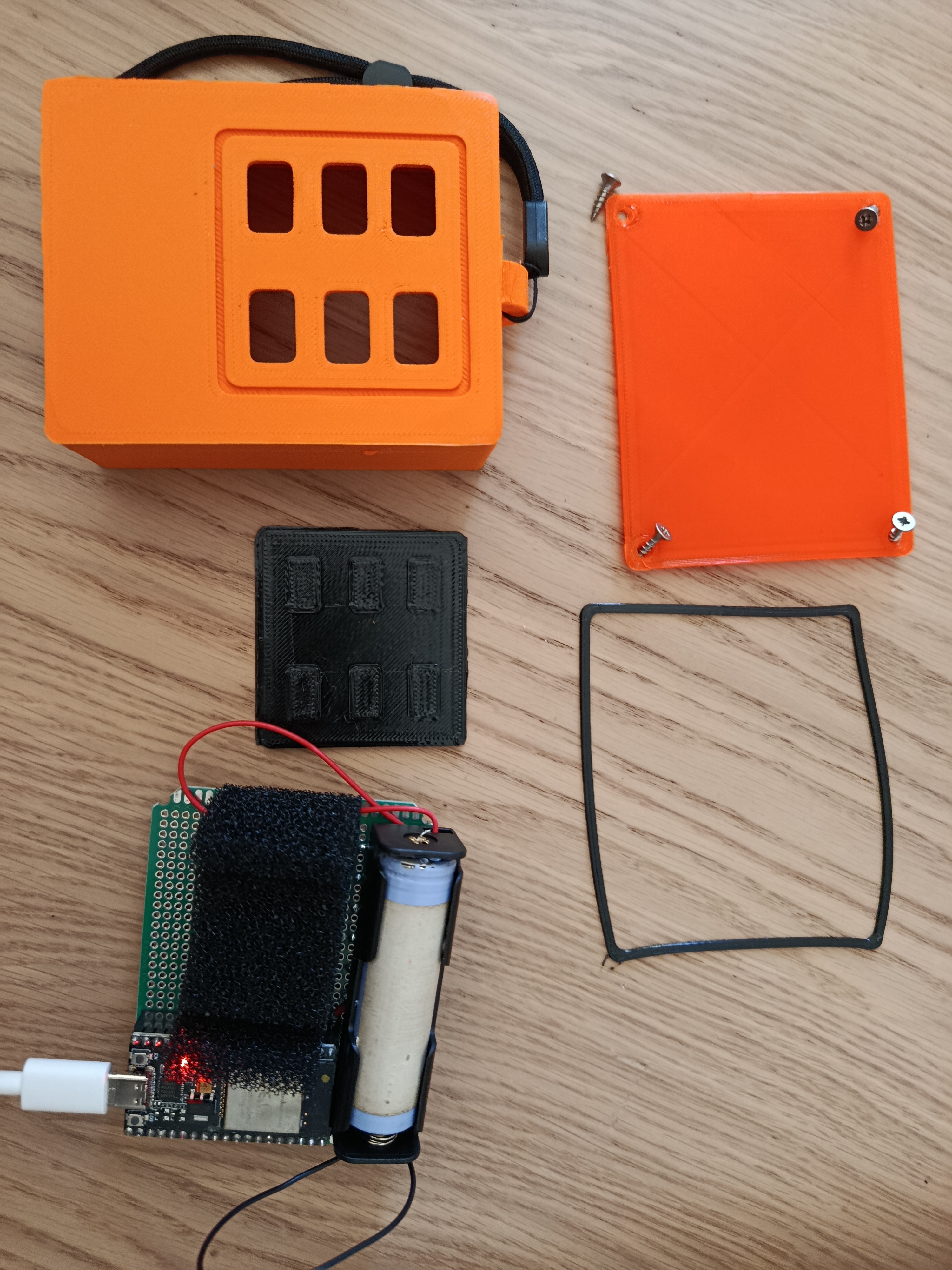
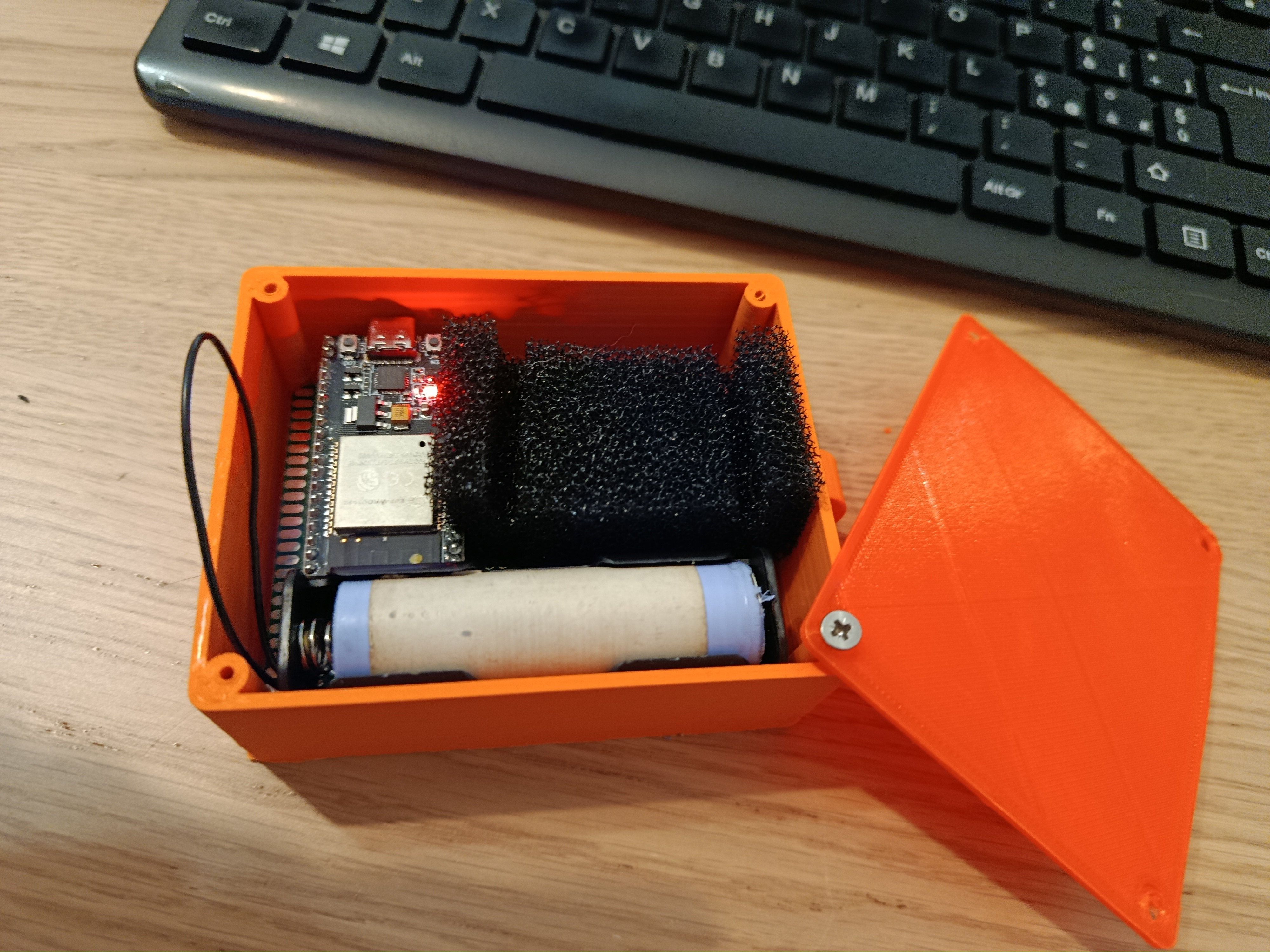
The software is really easy; it connects to the gateway wifi, and when the user presses a button, it sends the sentence back to the gateway. If the remote is not utilized for more than 20 minutes, it goes to sleep.
Surprisingly it worked like a charm at the first try! The reception distance allows me to use it in every part of the boat without issues, and I can also add some feedback to the remote, since we can process nmea sentences from all the boat instruments.
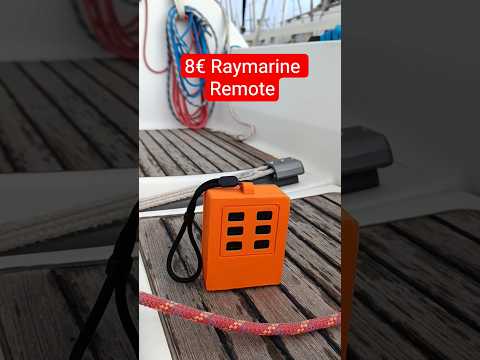
This is the first iteration of the project, and I’m already planning a new smaller version with only 3 buttons; maybe in the future I will also add a screen.
The code and the enclosure design are open-source, follow the project to stay up to date with future iterations: github.com/dakk/seatalk-wifi-remote
During my Quantum Computing journey, I often needed to simulate some quantum circuits; sometimes they are small, but some other times they are bigger enough ...
Despite it is sold as a non-cartographic handled GPS device, with limited storage capacity of 10 MB and the inability to expand it, the eTrex 10 GPS, like al...
Since the latest v0.1.18 version, the Qlasskit library offers two useful tool for circuit analysis and optimization.
In the last release of Qlasskit, I introduced a new feature able to export a qlassf function to a binary quadratic model (as bqm, qubo or ising model). This...
In early 2023, I embarked on a journey to explore the field of probabilistic computing. This endeavor culminated in the construction of a hardware prototype,...
Today, I’m going to show you how to use Qlasskit to create a quantum circuit able to search for Sudoku puzzle solutions.
In a recent article I wrote, “Quantum Computing on a Commodore 64 in 200 Lines of BASIC”, published both on Medium and Hackaday.com, shows a two-qubit quantu...
Traditionally, creating quantum circuits requires specialized knowledge in quantum programming. This requirement holds true when encoding a classical algorit...
In an age where companies are selling two-qubit quantum computers for a sum of money that would make your wallet recoil in horror, here we are, stepping off ...
This June I emerged as one of the top participants with 9 bounties collected (alongside another exceptional contributor) in the #UnitaryHack Hackathon, hoste...
A few days ago I came across a yt video discussing the ESA Copernicus program, a European initiative for monitoring earth via a satellite constellation. This...
Qiskit is a python SDK developed by IBM and allows everyone to create quantum circuits, simulate them locally and also run the quantum circuit on a real quan...
As someone noticed from the previous post, last weeks I started to write a new programming language for Tezos smart contracts. This project was initially int...
While writing a new programming language, it is often useful to write some real use-cases to test the syntax, the language expressiveness and the code cleann...
Documentation is like sex: when it is good, it is very, very good; and when it is bad, it is better than nothing
This is my new blog, based on jekyll. I’ll soon import old posts from my old blog.
Contractvm is a general-purpose decentralized framework based on blockchain. The framework allows to implement arbitrary decentralized applications in an eas...
Most of bitcoin dice software use a system to prove the fair play of the server for each bet. Most of them implement this mechanism using two seed (server se...
In the aim to merge two of my server on digitalocean, today I tried to write a mod_rewrite rule to redirect a secondary domain to a subfolder. After one hour...
MineML is a multithread CPU based bitcoin miner written in F#. At the moment it’s a slow implementation, but the class structure offers the possibility to im...